
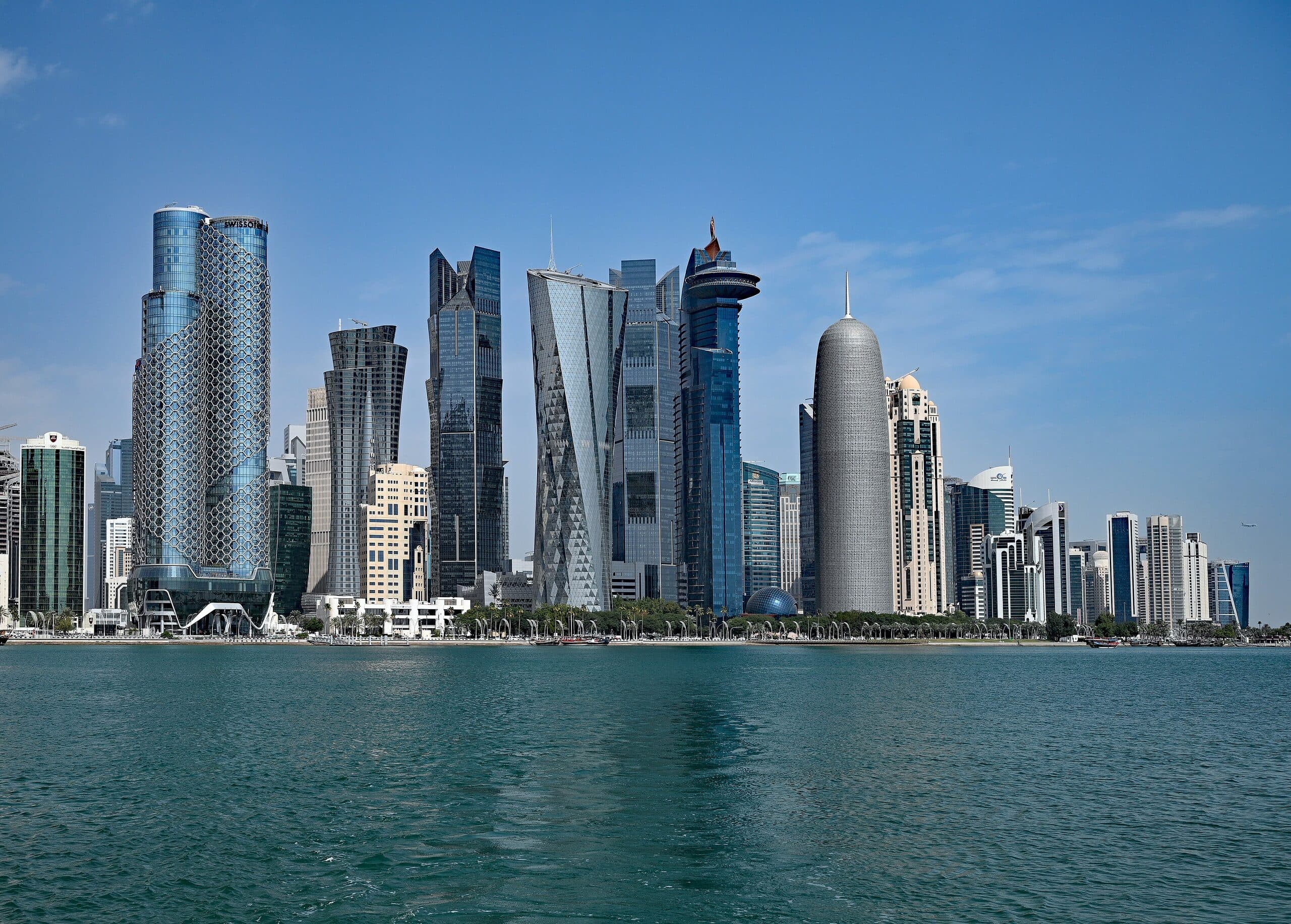
Why Qatar? The case, honestly made.
Every relocation pitch says the same three things: taxes, opportunity, lifestyle. Here is the actual case for Qatar — what holds up, what is nuanced, and how to judge whether it fits your plans.
An economy with unusual foundations
Qatar's wealth rests on one of the world's largest reserves of natural gas, exported as LNG to economies that will need it for decades. That single fact shapes everything founders experience here: a state with deep fiscal reserves, infrastructure built ahead of demand rather than behind it, and public projects — ports, metro, airports, stadiums — delivered at a pace most countries reserve for slideware.
The strategic story now is diversification. Qatar's national vision pushes deliberate investment into finance, technology, logistics, education, tourism and sport — which is precisely where newcomer businesses fit. A services company arriving today is not competing against the gas economy; it is selling into the economy being built alongside it.
A tax framework you can explain in one breath
Salaries carry no personal income tax. Corporate profits for most foreign-owned businesses are taxed at a flat 10%. Most sectors allow up to 100% foreign ownership, subject to activity approval. There are honest nuances — special regimes at the QFC and in the free zones, and your home country's exit rules still matter — but the headline framework is genuinely as simple as it sounds, which is rare.
Simplicity has a second-order benefit: planning. When the tax rules fit in a paragraph, your five-year model does not depend on interpretations — it depends on your business. Founders arriving from high-complexity jurisdictions consistently name this as the change they feel most.
A position on the map that works for business
Doha sits between Europe and Asia with one of the world's best-connected airports: European capitals are a six-to-seven-hour flight, most of the Middle East under two, and the Indian subcontinent within four. For a founder serving clients across regions, the working day overlaps usefully with both London and Singapore.
The market itself is compact and concentrated — a feature, not a bug. Decision-makers are reachable, procurement is centralised, and a good reputation travels fast. Businesses that thrive here tend to be the ones that treat the small market as a dense network rather than a limited one.
Life in Doha, without the brochure
Qatar is one of the safest countries in the world, and daily life reflects it — children move freely, cars stay unlocked in practice, and the evening Corniche is full of families. International schools teach British, American, French and IB curricula; healthcare is modern; and the cultural calendar — museums, sport, food — has grown into something genuinely interesting.
The honest counterweights: summers are seriously hot and life moves indoors for part of the year; costs concentrate in housing and schooling; and residency runs on sponsorship rather than open-ended settlement. None of these surprise a prepared founder — all of them surprise an unprepared one. Preparation is, in the end, the service we sell.
Frequently asked
Why do business in Qatar rather than elsewhere in the Gulf?
Qatar combines a simple tax framework, a wealthy and concentrated market, and a state actively investing in diversification. It is smaller than its neighbours — which means less noise, reachable decision-makers and faster reputations. Whether that beats a larger market depends on your model; we compare honestly, including against Dubai.
Is Qatar's economy really stable?
Its foundations are unusually deep: vast LNG reserves under long-term contracts, sovereign reserves, and infrastructure already built. No economy is beyond cycles, but Qatar enters them with more cushion than most — and the diversification push is precisely about reducing single-resource dependence.
What taxes will I actually pay?
No personal income tax on salaries; a flat 10% corporate tax on most foreign-owned business profits; special regimes at the QFC and in free zones. Your home country's rules on tax residency still matter when you leave — we flag when you need specialist advice on that side.
Is Qatar safe for families?
Consistently ranked among the safest countries in the world, with low crime and a family-centred public life. For most relocating families, safety is the least of their questions within a month of arriving.
Can foreigners really own 100% of a company?
In most sectors, yes — subject to approval of the activity. A minority of regulated activities still require Qatari participation. Checking your specific activity is the first step of any honest setup conversation.
How do I actually move — what is the sequence?
Company first, then residency through it, then banking and family sponsorship — typically 4 to 8 weeks for the company itself. Our relocation guides cover the sequence per country, and the services below handle each step.
Where to go from here
The services that turn the case for Qatar into a company and a residency.
Need an office or a business address in Doha? See coworking and office options at coworkingdoha.com
Plan your move
Guide
Move to Qatar from the UK
Guide
Move to Qatar from Germany
Guide
Move to Qatar from Türkiye
Guide
Move to Qatar from France
Guide
Move to Qatar — International
Comparison
Qatar vs Dubai
Comparison
Mainland vs QFZ vs QFC
Comparison
100% Ownership vs Local Partner
Comparison
Costs and Timelines
Calculator
Setup cost calculator